Standing Room or a Seat: Choose by the Night You Want
Standing room or a seat shapes how you hear, move and rest at a concert; choose an area that fits your energy, sightline and preferred closeness.
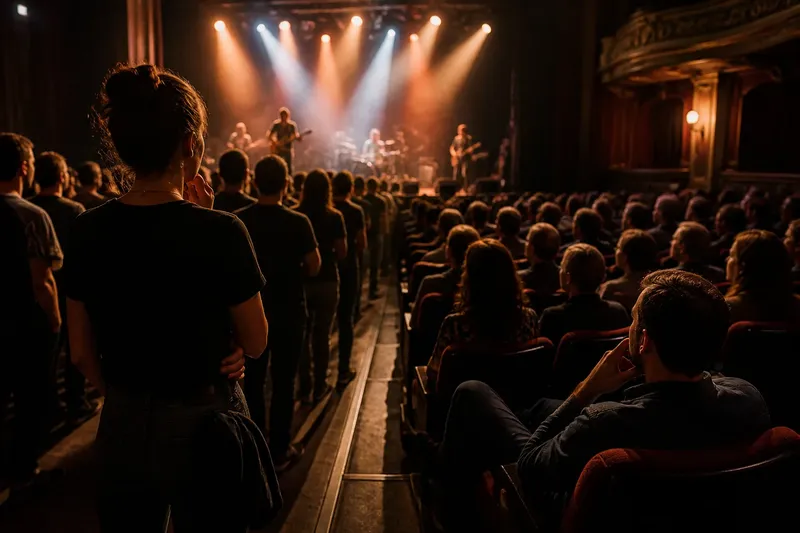
You reach the venue doors as the first notes sound from inside, then pause at the choice between the standing floor and the rows of seats. Standing room or a seat is not simply a question of being nearer or more comfortable: each changes how you listen, move and share space through the performance.
A good choice starts with the sort of attention you want to bring. Do you like to shift your weight, respond physically to the music and feel close to other listeners? Or would you rather settle in one place, rest your legs and give your attention to the sound? Neither preference makes a concert more serious or enjoyable than the other.
Restlessness can make a standing floor feel long
If standing through a performance sounds tiring before the music begins, the cause may be more than a general dislike of standing. The room might have few places to lean, the set may be longer than you want to remain upright, or your attention may be pulled towards finding a comfortable position rather than listening.
Check the venue’s seating plan and access information before choosing. Some events have a seated area alongside the standing floor; others offer limited seating or none. A seat can make it easier to relax your legs and stay focused, especially for music you expect to hear quietly or closely. Look at the seating location as well as the ticket label: a seat at the side may give a different view and sound balance from one nearer the centre.
If you still prefer the floor, consider whether you can change position without repeatedly crossing through the audience. Stand where you can keep a little room around you and avoid treating a railing or wall as a reserved resting place unless the venue says it is available for that use.
A seat can feel too still for music you want to move with
Some listeners find that a fixed seat makes lively music feel distant, even when the sound is clear. The cause is often the difference between hearing a strong rhythm and being able to respond to it: rows of chairs ask people to keep to their own space, while a standing audience may sway, clap or dance.
Choose standing room if movement is part of how you enjoy a performance and the event is set up for it. Check whether the floor is general admission, which usually means that the audience chooses its own position rather than being assigned a place. That freedom can be appealing, but it also means your view may depend on who arrives around you.
Seated areas need not mean silent or rigid listening. You can still tap a foot, clap when the audience does, or attend to the detail of an arrangement. The useful question is not whether you will move at all, but whether you want the freedom to move more than a fixed place allows.
Closeness does not always mean a better view
Standing near the stage can make a performer feel immediate, but the closest available patch is not automatically the best place to watch. A low angle, people directly ahead or a speaker stack in your line of sight can turn proximity into a restricted view. You may also find that your attention goes to the stage activity rather than the full group or the way the music fills the room.
A seat farther back can offer a broader picture. From there, it may be easier to follow musicians who are spread across the stage, notice exchanges between them and see the overall lighting. If you want to watch hands, expressions or a particular instrument, compare the plan with any view information the venue provides rather than assuming that distance alone tells you what you will see.
Sound is shaped by the room as well as by your position. Standing areas often place listeners closer to the stage, while seated areas may distribute them across a wider space. These are tendencies, not promises: the venue’s layout and the event’s sound setup matter, so choose the experience you want rather than expecting one area to sound universally superior.
Shared space can bring energy and friction
A standing audience creates a sense of collective movement, but it also means that your personal space can change as people arrive and respond to the music. If you become distracted by crowding, the cause may be choosing a congested spot rather than standing itself. Move towards the edge of the floor, where there may be more room to settle without losing the live atmosphere.
Seats offer a defined place, which can reduce the effort of negotiating space. They can bring their own frustrations: a person in front may lean or stand, or the row may feel close to neighbouring listeners. If you are selecting a seat in advance, look for the venue’s notes about restricted views and the layout of the rows. If you are already there, a polite request or a word to venue staff may be more useful than trying to solve a persistent obstruction alone.
Neither arrangement removes the need to be considerate. In a standing area, leave room for others to shift and do not assume everyone wants to dance. In a seated area, follow the audience’s cues about standing or clapping so that your response does not block someone else’s view.
Small practical issues can cloud the choice
Sometimes the problem is not a strong preference for one format but uncertainty about the evening’s practical demands. You may be unsure how long the performance lasts, whether you can leave and return, or whether a seat is available to you. Check the event and venue information before buying; policies and facilities differ, and the venue can answer questions that a general ticket description cannot.
Think about the whole visit, not only the music. Getting to the venue, waiting to enter and moving through a crowd can all affect how much standing feels comfortable. If you know that prolonged standing is difficult for you, ask the venue about seating and access arrangements before deciding. For a need that affects safe or comfortable attendance, contact the venue directly rather than relying on assumptions about a particular area.
Say you want to see a lively band, but expect to arrive after work feeling tired. You might choose a seat if having a defined place to rest matters more than dancing; if you would rather move with the set, you could choose the standing floor and aim for its edge rather than the densest part. The observable difference is the kind of effort you spend during the music: settling into a view, or making room to move.
It is not worth trying to predict every change in the audience or searching for a perfect spot from a floor plan alone. A clear preference about rest, movement or view is more useful than rehearsing every possible annoyance.
Which area suits the night you want?
Is standing room always closer to the performers?
Not necessarily. The standing floor may begin near the stage, but the view depends on its shape, the crowd and any barriers or equipment. Check the venue’s layout and choose standing for freedom of movement or a close atmosphere, not on distance alone.
Will a seat make a concert feel less lively?
A seat can feel more contained, particularly when the audience is expected to remain seated, but it does not stop you responding to the music. If you want to dance or change position freely, standing is usually a more natural fit; if you prefer attentive listening with a stable view, a seat may suit you better.
What if I want to rest but also move around?
Look for an event with both seated and standing options, and check whether the ticket allows you to use a particular area only. Some venues have separate zones, so do not assume you can switch between them once inside. If movement between areas matters, ask the venue before booking.
How do I choose if I have not seen the venue before?
Read the seating plan, access information and notes about sightlines, then ask the venue about any detail that remains unclear. Decide which compromise matters least to you: less room to move, less opportunity to rest, or a view that may not be centred on the stage.
Choose for how you want to listen
For standing room or a seat, begin with the physical experience you want during the performance. A seat can offer a defined place to rest and observe; standing can make it easier to shift, sway and feel part of a moving crowd. The room may modify either experience, but knowing your own preference gives you a sound basis for choosing.
If two options still seem equally appealing, ask yourself what would distract you more: staying in one place when the music invites movement, or standing when you would rather settle down. That answer is often enough to choose an area that fits the night, rather than the one that sounds best in theory.