The Familiar-Name Trap: Choosing Beyond the Composer
Choose a concert beyond the composer’s name by comparing its programme, performers and musical focus, so you can judge whether the evening suits your interests.
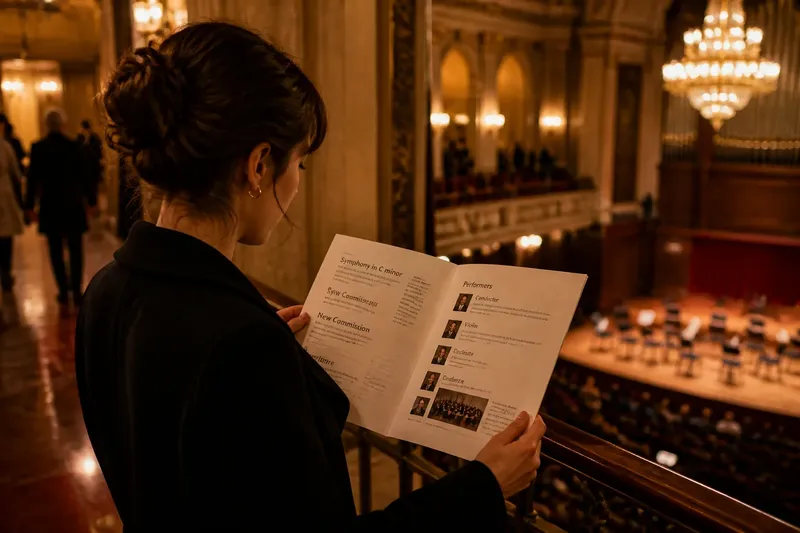
You spot a composer you know on a concert listing, then notice the rest of the programme is unfamiliar. For choosing a concert beyond the composer’s name, look at what the musicians will play and how the programme connects its pieces, rather than relying on the familiar name alone.
The programme tells a story the composer’s name cannot
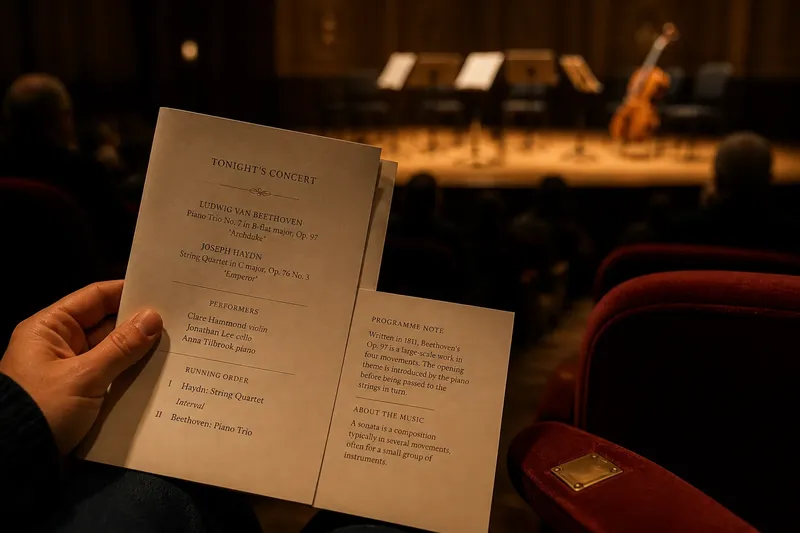
A concert programme is the selection and order of works performed at an event. It can centre on one composer, bring together music from different periods, or pair a large work with shorter pieces. Those choices shape the evening’s musical thread.
Read the full list of works, not just the first name in bold. A listing might pair a well-known symphony with a contemporary piece, or place works for different instruments side by side. The contrast may be the point: the programme can invite you to hear shared ideas, striking differences or a change of musical atmosphere.
Notice how the listing describes the event. Terms such as “all-Beethoven” suggest a single-composer programme, while “music from the French Baroque” points to a period and style. These labels are useful clues, but the individual work titles tell you more about what is actually included.
Follow the performers and instruments
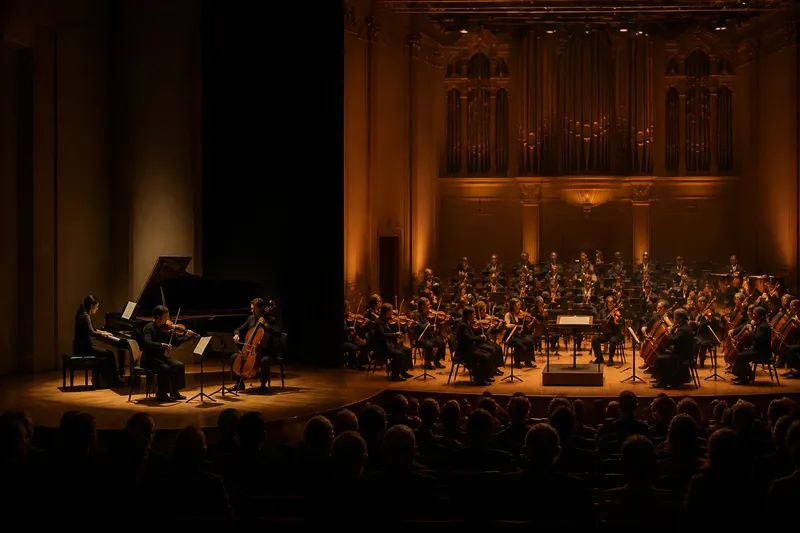
The musicians on stage affect what the programme can offer. A pianist’s recital puts one instrument at the centre; a string quartet lets four players shape and answer one another; an orchestra combines instrumental sections into a larger sound. These details can make an unfamiliar programme easier to picture.
Look for named soloists, ensembles and conductors. A soloist may be featured in a concerto, where an individual instrument is set against an orchestra, or in a recital built around that performer. If a listing names a choir or vocal ensemble, words and the blend of voices may be central to the event.
- Solo recital: Check the instrument and performer. If you enjoy hearing one musician shape a varied programme, this may appeal; if you want several musical voices in conversation, look for a chamber ensemble instead.
- Chamber ensemble: Check which instruments are listed. If you like following exchanges between players, a quartet or trio may suit you; if you prefer a broad, layered sound, consider an orchestral programme.
- Orchestra: Check whether the programme includes a soloist, choir or only orchestral works. If you want a large ensemble sound, this is a clear signal; if you would rather focus on a small group, choose a recital or chamber listing.
- Vocal or choral music: Check whether singers perform alone, with instruments or with an orchestra. If words and vocal colour interest you, the listing may fit; if you prefer instrumental music, choose a programme without singers.
These formats describe the forces, not a guaranteed mood. A quartet can play music of great intensity, and an orchestra can perform quietly. Use the instrumentation to anticipate the kind of sound on stage, then read the work titles for a fuller sense of the programme.
Use musical period and work type as clues
A period label can help you orient yourself, though it does not tell the whole story. Baroque, Classical, Romantic and contemporary are broad terms for music associated with different eras and conventions. A venue’s short description may explain what makes a particular work distinctive.
Work types offer another useful clue. A concerto often highlights a soloist, a symphony is written for orchestra, and a sonata commonly centres on one or a few instruments. These are broad conventions rather than rigid rules, so check the listed performers and instrumentation too.
If a title is unfamiliar, search the venue’s programme page for its description or listen to a short recording excerpt if you want a preview. You do not need to learn the entire score. A few notes about the work’s instruments or place in the programme may be enough to make the listing legible.
Which programme details should guide your choice?
What does an all-composer programme mean?
It means the listed works are by the same composer, though they may differ in scale, style or instrumentation. Check the titles and performers to see whether the evening centres on one kind of music or moves between contrasting works.
How can I tell whether a concert includes a soloist?
Look for a named instrumentalist alongside a concerto or another work featuring a solo part. If the listing is unclear, the venue’s programme page may name the featured performers and explain their roles.
What if I recognise none of the work titles?
Start with the instruments, ensemble and any description of the programme’s theme. If those appeal, unfamiliar titles need not rule out the concert; a short venue note can help you decide whether to listen to an excerpt before booking.
Should I listen to recordings before choosing?
A brief excerpt can help you recognise a sound or instrument, but it cannot reproduce the atmosphere of a live performance. If previewing music feels like homework, use the programme notes and performers’ details instead.
Compare listings by what connects the works
When two concerts share a familiar composer, compare their programmes rather than treating the name as the deciding factor. Check the works, performers and any theme that links the music. If one listing gives little detail, the venue’s programme page or box office may clarify what is included.
Say you are choosing between a concert pairing a familiar symphony with a new orchestral work and a recital of solo piano pieces by an unfamiliar composer. Your starting information is the two listings: one offers a shared orchestral format with a contrast in repertoire; the other centres on a single performer and instrument. You decide that hearing how two orchestral works sit together interests you more than a piano-focused evening, so you choose the first listing. The trade-off is clear: it offers a familiar work alongside something new, while the recital would have made one performer the focus throughout.
Not every detail needs investigating. Reading several biographies or listening to complete recordings is not worth the effort if the programme already appeals and you would rather meet the music fresh in the hall. For choosing a concert beyond the composer’s name, the useful question is what the listed works and performers will put in front of you, and whether that combination interests you.