Why a Programme Puts One Piece Before Another
Why a programme puts one piece before another shapes the concert’s arc. Learn what contrasts and transitions can help you notice as you listen.
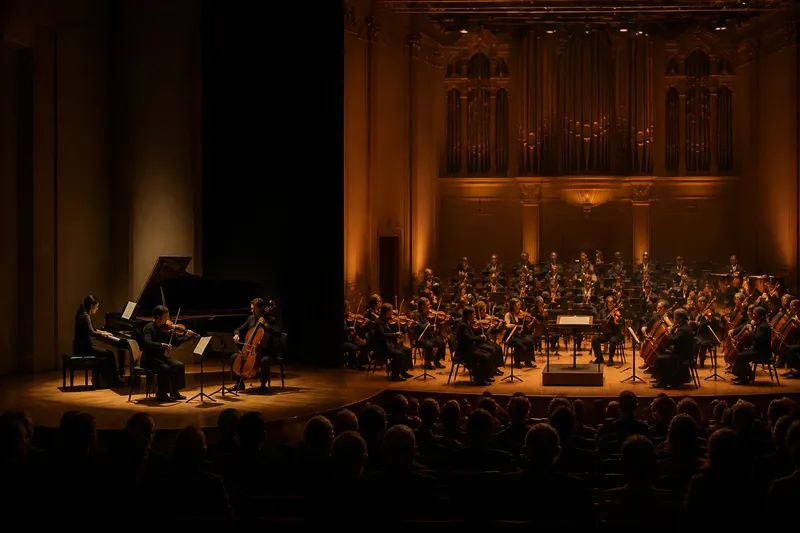
The first piece ends, the applause settles, and the musicians turn to a work with a very different sound. That change is part of how a concert programme works: why a programme puts one piece before another often comes down to contrast, pacing and the transition between them. You do not need to recognise a composer or know a score to notice the shape that emerges.
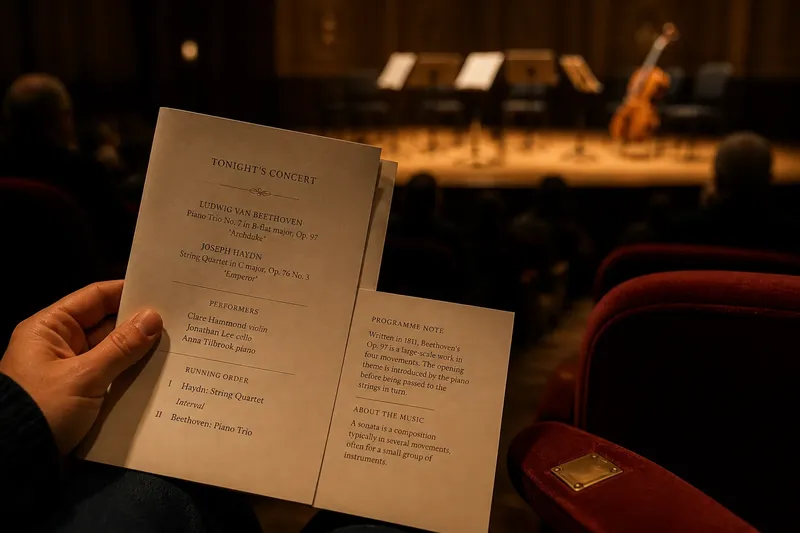
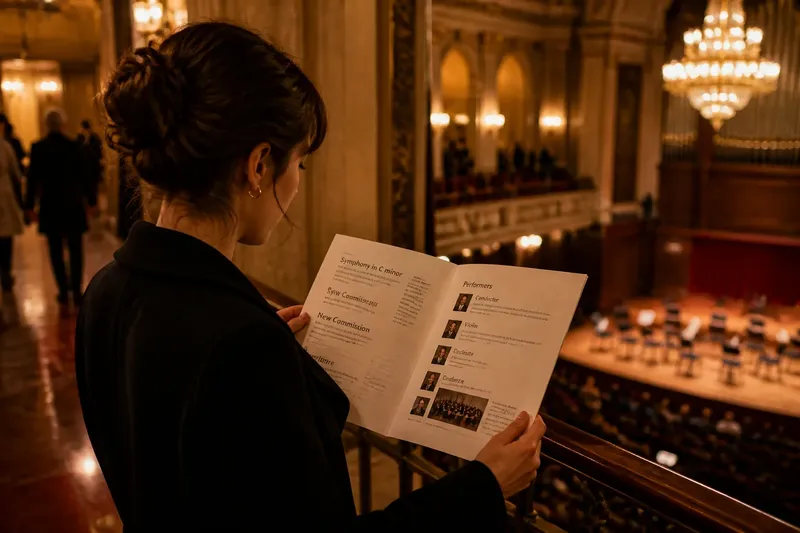
Read the programme as a sequence, not a list
A concert programme names works in order, but their order can influence how each one is heard. A quiet opening may leave room for a later work to feel expansive; a lively opening may establish energy that the next piece redirects. The effect is not a code with one correct interpretation. It is an invitation to notice how one sound alters your expectation of the next.
Think of each work as having several audible features: volume, pace, texture, mood and the size of the performing group. Texture means how musical lines fit together: a single exposed melody feels different from a dense weave of instruments, even if both are played at a similar volume. A programme can shift one feature at a time or change several at once.
The decision guide is simple: if you like a clear contrast, listen for a sharp change; if you prefer a gradual arc, attend to links in tempo, mood or instrumentation; if the works seem unrelated, follow the pause and the audience’s reset rather than trying to invent a hidden story.
Choose contrast when a change of colour helps you listen
A brisk, bright work followed by something slow and restrained gives the ear a strong point of comparison. The second piece may seem calmer because it follows such activity, while its quiet details might be harder to notice after a similarly energetic work. In another pairing, a solo instrument can make a full ensemble sound especially broad when it arrives afterwards.
This kind of contrast suits listeners who enjoy being reoriented. You can simply register what has changed: many instruments or a few, a steady pulse or a flexible one, a tightly repeated pattern or a more wandering line. There is no need to decide whether the second work is an answer to the first.
Contrast can also keep a long stretch of music from feeling uniform. A compact, forceful work may create a useful counterweight to a more spacious one. The balance is not automatic, though: a sudden shift can feel startling rather than satisfying, and that response is just as useful to notice.
Choose a gradual arc when you like connections to accumulate
Some programmes move by small steps. The works might share a general mood, favour similar instrumental colours or differ in scale without making a dramatic break. Instead of asking, “What is the connection?”, listen for what carries across: a particular brightness, a flowing pace or a sense of restraint.
A gradual sequence suits listeners who prefer continuity. It can make the concert feel as though it is gathering or easing its energy, even if the pieces were written separately and do not tell a single story. The change may be clearest only in retrospect, when you realise that the final work feels larger, lighter or more settled than the opening one.
Imagine you arrive with no familiarity with the music and hear a small group playing a nimble work before a broader, slower ensemble piece. You might first notice the increase in scale, then hear the second work’s quieter passages as a change of pace rather than a loss of momentum. That is a complete way to follow the transition; recognising a formal link is optional.
Let pauses and practical changes count as transitions
A transition is not always a musical bridge. The musicians may leave the stage, a piano may be moved, or the room may fall quiet before the next work begins. These practical moments separate the pieces, but they also give your attention a chance to reset. A short silence can make the next sound feel newly placed, while continuous playing can preserve a sense of forward motion.
Notice whether applause, tuning or a change of performers breaks the atmosphere or becomes part of the evening’s rhythm. There is no need to treat audience behaviour as a clue about the music’s meaning. The useful question is whether the pause lets you arrive at the next piece with fresh attention or makes the programme feel interrupted.
What is not worth the effort is trying to assign a fixed emotional message to every ordering choice. A change in mood may be deliberate, practical or simply one of several reasonable programming decisions. Listening for what the sequence does to your attention is more grounded than guessing at a secret intention.
Which programme shape fits your listening mood?
What if I do not know any of the works?
Follow broad, audible features such as pace, volume and the number of instruments, rather than looking for names you recognise. A programme’s sequence can still feel clear through changes in sound and scale.
Why might two very different works sit together?
A strong contrast can sharpen your perception of both pieces, making a shift in mood, texture or energy easy to hear. The pairing may also create variety across the concert without implying that the works share a story.
How can I tell whether the programme is building gradually?
Notice whether changes arrive in stages: perhaps the sound grows fuller, the pace becomes more animated or the mood moves from inward to open. You need not identify a formal plan; the accumulating impression is enough.
Does a pause mean the next work is unrelated?
No. Performers may need time for a practical change, and related works can be separated by silence just as contrasting works can follow without a long break. Listen for the transition’s effect on your attention rather than treating the pause as a verdict.
Use the order to notice your own response
When you look at why a programme puts one piece before another, treat the printed order as a starting point for listening, not a puzzle to solve. Decide whether you are most drawn to a sharp contrast, a gradual change or a clean reset between works, then listen for the feature that makes the shift audible. That small choice can help an unfamiliar concert feel coherent without requiring you to know the music in advance.